Strategic Sourcing Framework: A Practical Buyer-Side Model
A strategic sourcing framework organizes the evidence and choices behind a supplier decision. This five-pillar model keeps business requirements, market intelligence, competition, commercial terms, and governance connected.
Framework, process, strategy, and playbook are different
A strategic sourcing framework is a reusable structure for the questions, evidence, and decision rights behind a sourcing choice. It helps a team determine whether its plan creates buyer value, addresses risk, and can actually be executed. It can be used for a new purchase, renewal, consolidation, or change of supplier.
Use the right structure for the question
Term
Purpose
Example
Framework
Organizes the dimensions that must be considered.
Five connected pillars around value, risk, and feasibility.
Process
Sequences activities and decision points.
Define the need, assess alternatives, evaluate, contract, implement.
Strategy
Makes choices for a particular category or requirement.
Compete the platform but phase migration to preserve continuity.
Playbook
Provides practical instructions and reusable artifacts.
Use an intake checklist and evidence log to prepare a review.
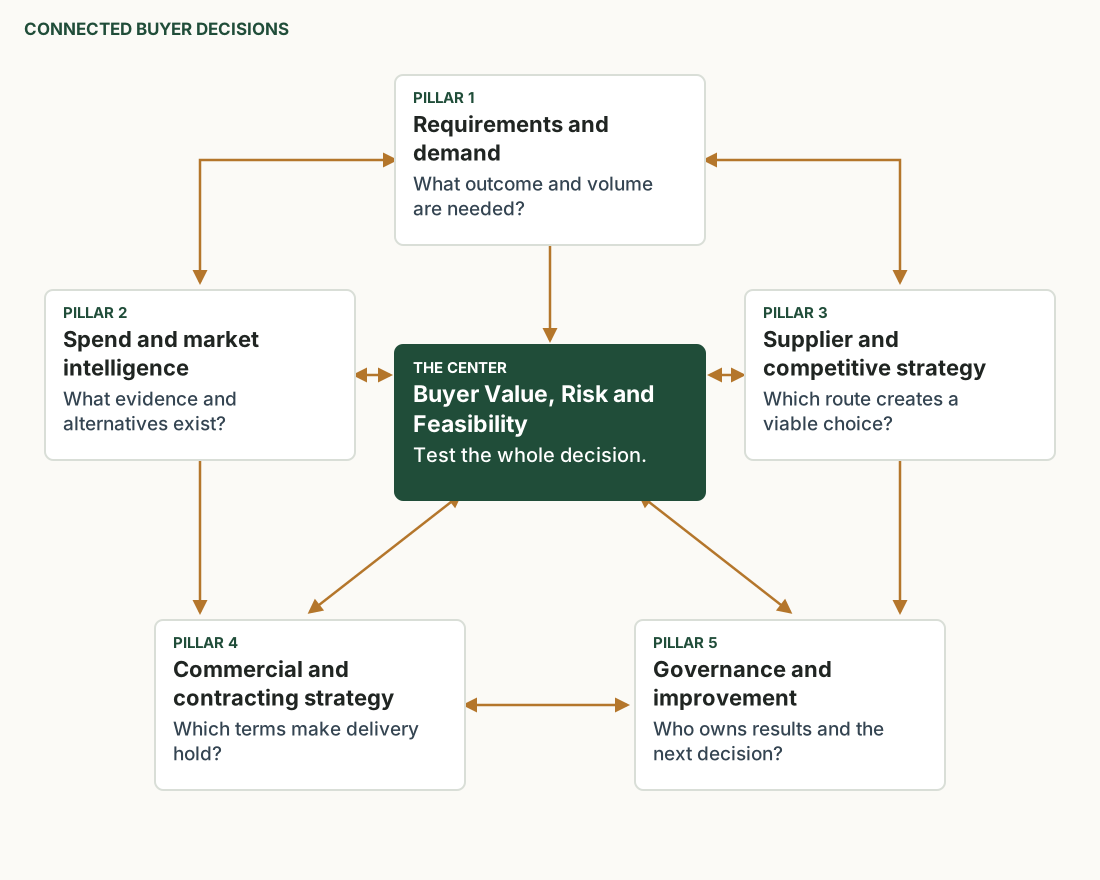
The five-pillar model below is original Sourcing Playbooks editorial guidance. It is not presented as a third-party standard or a replacement for your organization’s approval policy. For a sequence of activities, use the seven-step sourcing process.
Five pillars around buyer value, risk, and feasibility
A decision structure, not a sequence. The center tests each pillar against buyer value, risk, and practical execution. Open full-size diagram
1. Business requirements and demand
Decision question: What outcome is needed, by whom, and at what volume?
Challenge requirements that describe the incumbent product rather than the business task. Separate demand that is measured from demand that is forecast. Identify which stakeholder can accept a tradeoff.
Decision question: What do we spend, and what credible alternatives exist?
Reconcile the cost baseline before estimating opportunity. Segment the market, examine capacity and constraints, and attach sources and confidence to material findings.
Deliverables: Spend baseline, market assessment, evidence and assumptions log.
3. Supplier and competitive strategy
Decision question: Which supplier structure and event route create a viable choice?
Compare single-provider, multi-provider, phased, and retained-service options where relevant. Competition is useful only when alternatives can meet the need and switching is feasible.
Decision question: Which terms make the economics and delivery commitments hold?
Test price metrics against demand and allocate responsibility for implementation. Address service, renewal, change, exit, and transition together with headline price.
Deliverables: TCO scenarios, negotiation plan, contract issues and approval record.
5. Governance, performance and continuous improvement
Decision question: Who owns delivery, exceptions, and the next decision?
Assign acceptance and service owners before award. Track results against the approved assumptions and escalate changes before they become unplanned renewal commitments.
Deliverables: Decision log, implementation plan, scorecard, value and renewal reviews.
The pillars interact. A capacity constraint discovered in market research may require a phased requirement. A costly exit provision changes the TCO comparison. A weak implementation plan may outweigh an attractive subscription price. Revisit the connected decisions when an assumption changes.
Governance and decision rights
A framework needs an approval record, not simply a completed slide. For each material decision, record the proposed choice, evidence, alternatives rejected, unresolved issue, owner, approver, and review trigger. Make the difference between advice and authority explicit.
Example decision-right structure; adapt it to local authority
Decision
Recommends or validates
Approval route to establish
Business scope and tradeoffs
Business and technical owners
Accountable sponsor accepts scope and business impact.
Commercial route and supplier recommendation
Sourcing, with evaluator input
Authorized business/procurement approval under local policy.
Affordability and value claim
Finance
Budget owner and finance confirm the baseline and benefit treatment.
Security, privacy, and legal exception
Relevant specialist owner
Designated risk authority accepts or rejects the exception.
Go-live and service acceptance
Implementation and service owners
Named owner confirms acceptance evidence and residual issues.
Do not use a majority vote to waive a mandatory security gate. Equally, do not let one reviewer’s unstated preference become a new requirement after proposals arrive. Escalate conflicts through the named approval route.
Adapt the framework by spend type
Keep the pillars; vary the depth of evidence
Spend type
Emphasis
Decision to test
Enterprise software
Integration, licensing metric, implementation, data portability
Does the proposed platform fit the operating environment and exit plan?
SaaS renewal
Actual use, entitlements, notice dates, renewal mechanics
Can the buyer rightsize or change the commitment before leverage expires?
Managed services
Scope, staffing, demand variability, service measurement
Are outcome commitments measurable and within the provider’s control?
Hardware and infrastructure
Configuration, delivery, support life, spares, disposal
Can the supply and support plan meet the deployment schedule?
Would standardization and an efficient buying channel add more value than another event?
Scale review to risk and switching difficulty, not only annual spend. A small but critical integration dependency may deserve more attention than a larger interchangeable purchase. Use a short decision memo for a simple buy and a fuller evidence pack for a complex transition.
IT and software example: applying all five pillars
Illustrative scenario: an organization is deciding whether to consolidate service-management software. Business owners first agree that faster cross-team routing is the outcome, while keeping specialist workflows is a constraint. Usage analysis identifies dormant licenses, but the team does not assume every dormant license can be eliminated without checking business continuity needs.
Market research identifies viable platform and integration-led alternatives. The sourcing strategy tests both rather than framing the RFx around the incumbent’s architecture. Commercial analysis includes subscription, integration, training, dual running, and exit. Contract review focuses on acceptance, scope-change mechanics, renewal terms, and data export.
The team selects a phased rollout only after operations names an implementation owner and finance validates the cost assumptions. The decision record states what would trigger reconsideration: unresolved integration risk, a material migration delay, or an unacceptable contractual limitation. The completed examples show how comparable evidence can support a conditional award.
Framework implementation checklist
Name the sourcing decision and sponsor before assembling a large document.
Create one shared evidence log with sources, dates, owners, and confidence.
Assign a deliverable and accountable reviewer to each pillar.
List mandatory gates separately from weighted preferences.
Agree how to compare cost, service, risk, and implementation feasibility.
Record rejected alternatives and the reasons they were rejected.
Identify the conditions that would reopen an approved decision.
Carry contract obligations into an implementation and service scorecard.
Schedule reviews around notice dates, demand changes, and performance issues.
Start with one sourcing decision. Review whether the framework exposed a material tradeoff or prevented an unsupported assumption. Remove duplicated paperwork; retain the evidence needed to explain the choice.
Use the existing workbook examples for preparation fields and the Full Sourcing Playbook System for the connected preparation packet. This framework extends the decision perspective through contracting and governance without changing the scope of those existing resources.
Frequently asked questions
Is a sourcing framework the same as a sourcing strategy?
No. The framework organizes the questions. The strategy is the set of choices made for a particular requirement or category using the evidence.
Can the framework be used for renewals?
Yes. Recheck demand, supplier alternatives, commercial terms, and governance before the notice deadline. A renewal is a sourcing choice even when no RFx is run.
Must every pillar have a separate document?
No. A short memo can cover all five pillars for a simple decision. Use separate artifacts only where the complexity or review responsibilities justify them.
Does this replace procurement policy?
No. Apply the framework within your organization’s approval, competition, contracting, and risk policies.