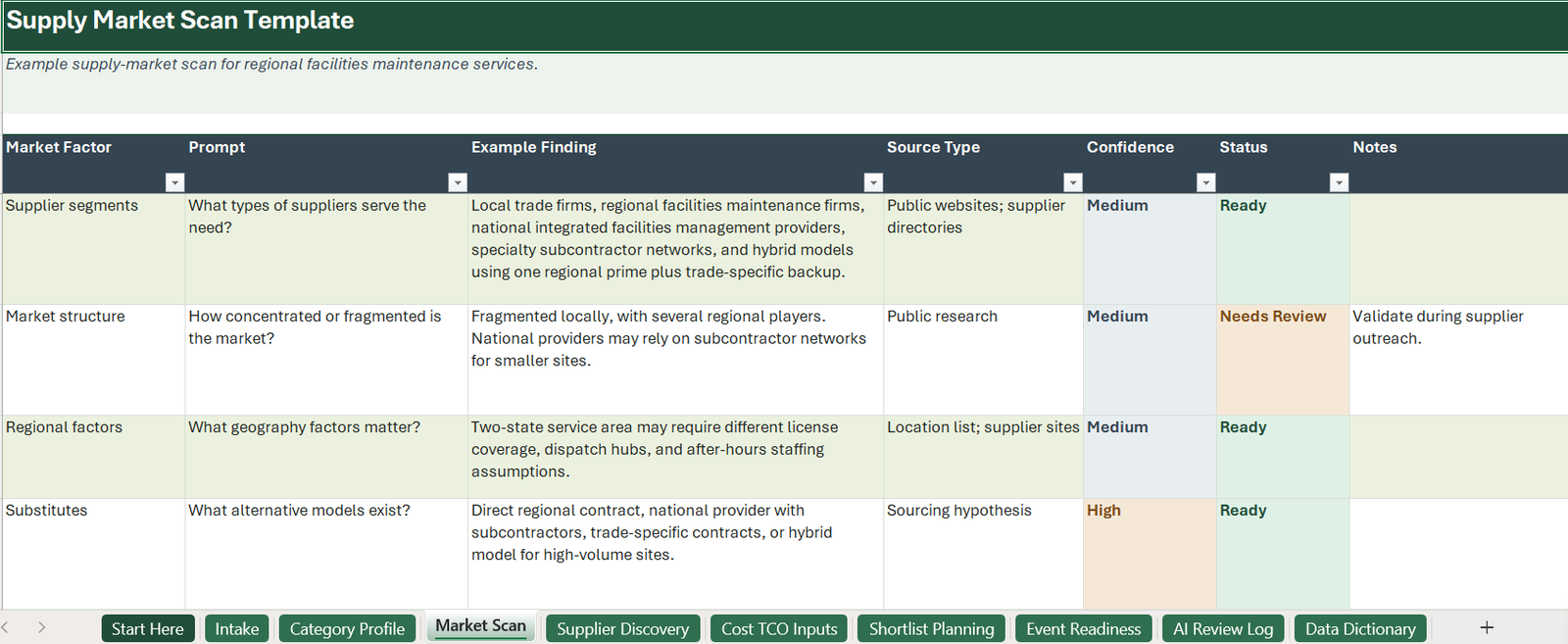
Market scan worksheet
Example findings, source type, confidence, status, and notes.
Free starter kit
Download the completed example workbook, blank workbook, and PDF guide for buyer-side sourcing preparation.
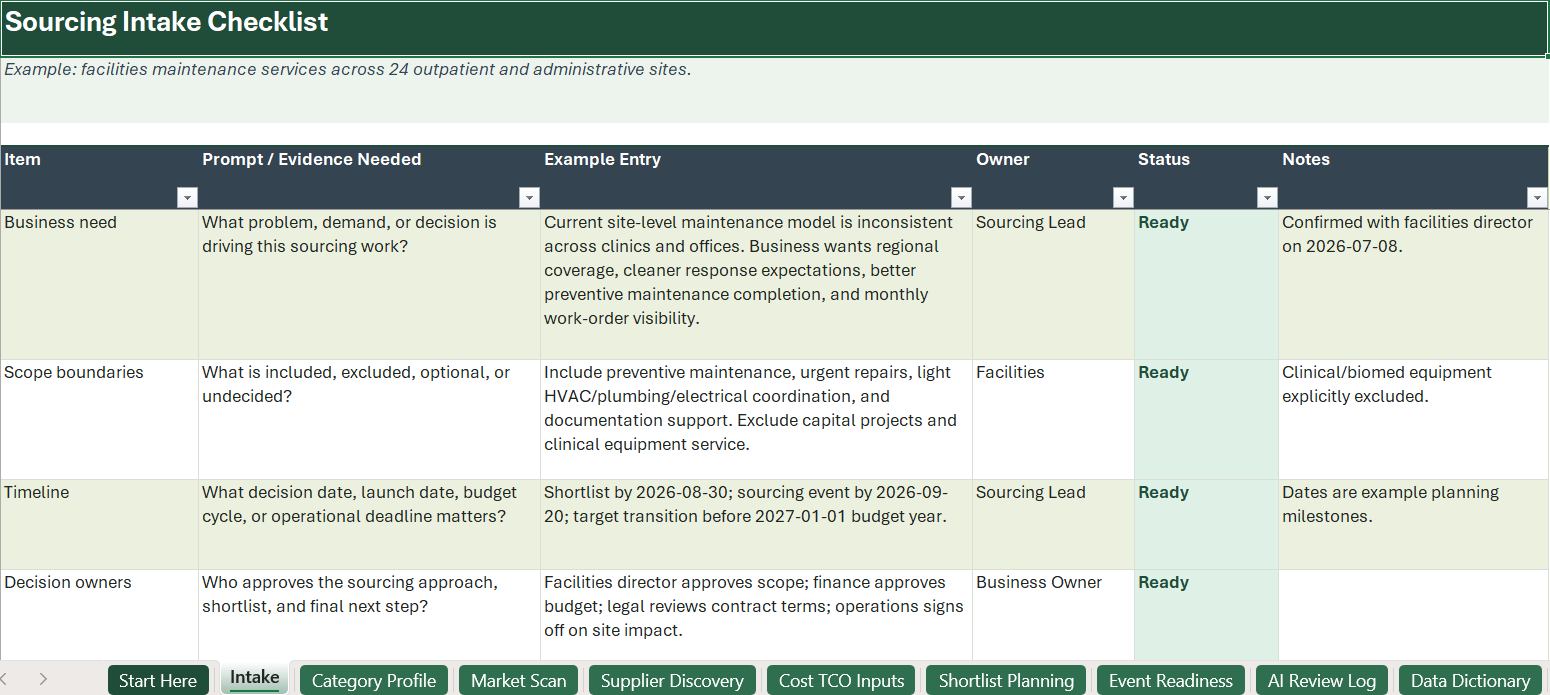
The example workbook shows a realistic business-side sourcing packet. The blank workbook gives you the same structure without example content. The PDF guide explains how to move through the worksheets and where human review belongs.
How the worksheets connect
Each worksheet carries evidence into the next stage: intake shapes the category profile, market scan informs supplier discovery, cost/TCO questions affect shortlist planning, and event readiness becomes the final gate.
Clarify the need, scope, owners, timing, constraints, and source material.
Turn demand, current state, requirements, and assumptions into sourcing context.
Map supplier segments, source evidence, market pressure, and open questions.
Build a supplier universe with fit signals, evidence gaps, and constraints.
Separate cost-driver facts, assumptions, TCO inputs, and sensitivity questions.
Document shortlist logic before formal scoring or vendor selection.
Confirm the sourcing packet is ready for the next phase.
Example findings, source type, confidence, status, and notes.
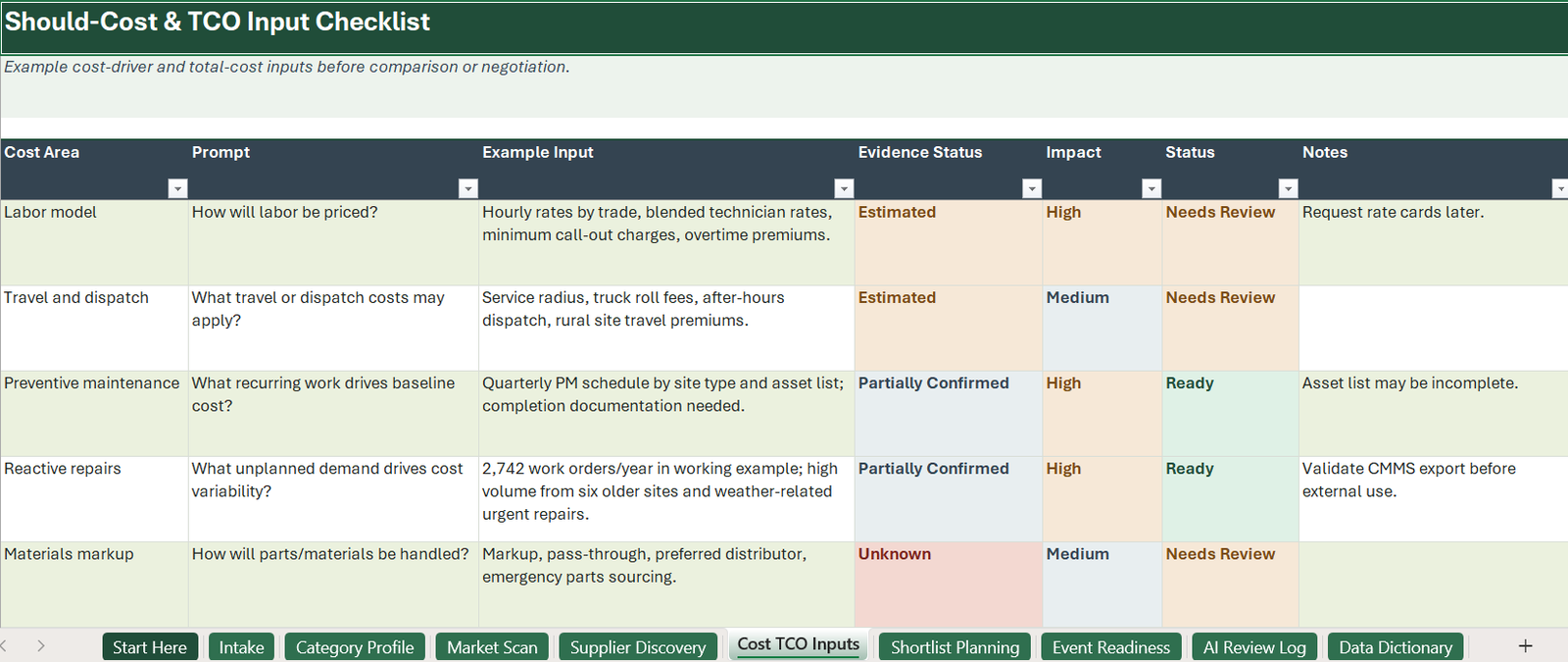
Evidence status, impact, readiness, and sourcing follow-up notes.
Tabs connect intake, category profile, market scan, supplier discovery, cost/TCO, shortlist, readiness, and AI review.
The starter kit does not include legal advice, pricing strategy, RFP scoring, renewal negotiation, vendor risk review, clinical guidance, or a full category-specific implementation. Request the full package overview for deeper use.
The free starter kit may be downloaded, edited, and used internally for business sourcing preparation. Do not resell, republish, redistribute as a standalone product, remove notices, or present the materials as legal, financial, compliance, cybersecurity, clinical, or other professional advice.
Next step
The free kit shows the workflow. The full package discussion can cover team use, advisory use, category-specific adaptations, and implementation support.