When to use it
- The category has hidden or variable cost drivers.
- Baseline spend is incomplete.
- The team needs finance-ready questions before supplier comparison.
Cost drivers and TCO
This playbook helps sourcing teams avoid comparing supplier options on visible price alone when service model, transition burden, logistics, support, or lifecycle costs may matter.
Separate cost-driver facts, assumptions, total-cost inputs, and sensitivity questions before comparison or negotiation.
This playbook helps sourcing teams avoid comparing supplier options on visible price alone when service model, transition burden, logistics, support, or lifecycle costs may matter.
Workbook example
Labor model, travel and dispatch, preventive maintenance, reactive repairs, materials markup, reporting, and switching friction.
Decision or review supported: Whether cost-driver assumptions are ready for finance review before shortlist approval.
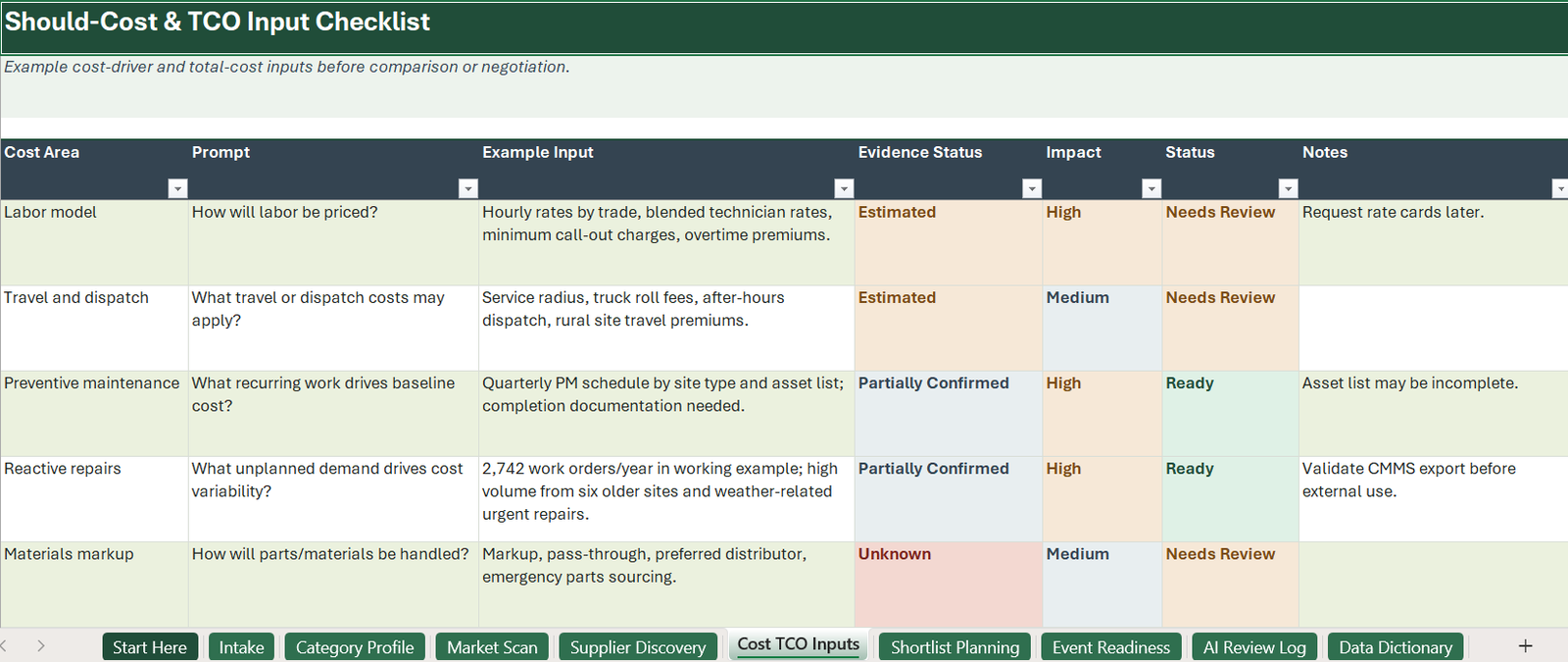
It is not a full financial model, audited cost analysis, tax review, or negotiation strategy. Finance and category specialists should validate assumptions before decisions rely on them.
Illustrative example: facilities maintenance costs may include labor rates, after-hours dispatch, travel premiums, preventive maintenance, materials markup, reporting administration, and site onboarding friction.
No. It prepares cost-driver understanding before later pricing comparison or negotiation work.
Yes, but the starter kit focuses on inputs and assumptions so teams can adapt it safely.
Use supply market analysis to test supplier-market constraints, alternatives, and evidence quality before advancing sourcing assumptions.
Next step
The free kit shows the workflow. The full package discussion can cover team use, advisory use, category-specific adaptations, and implementation support.